

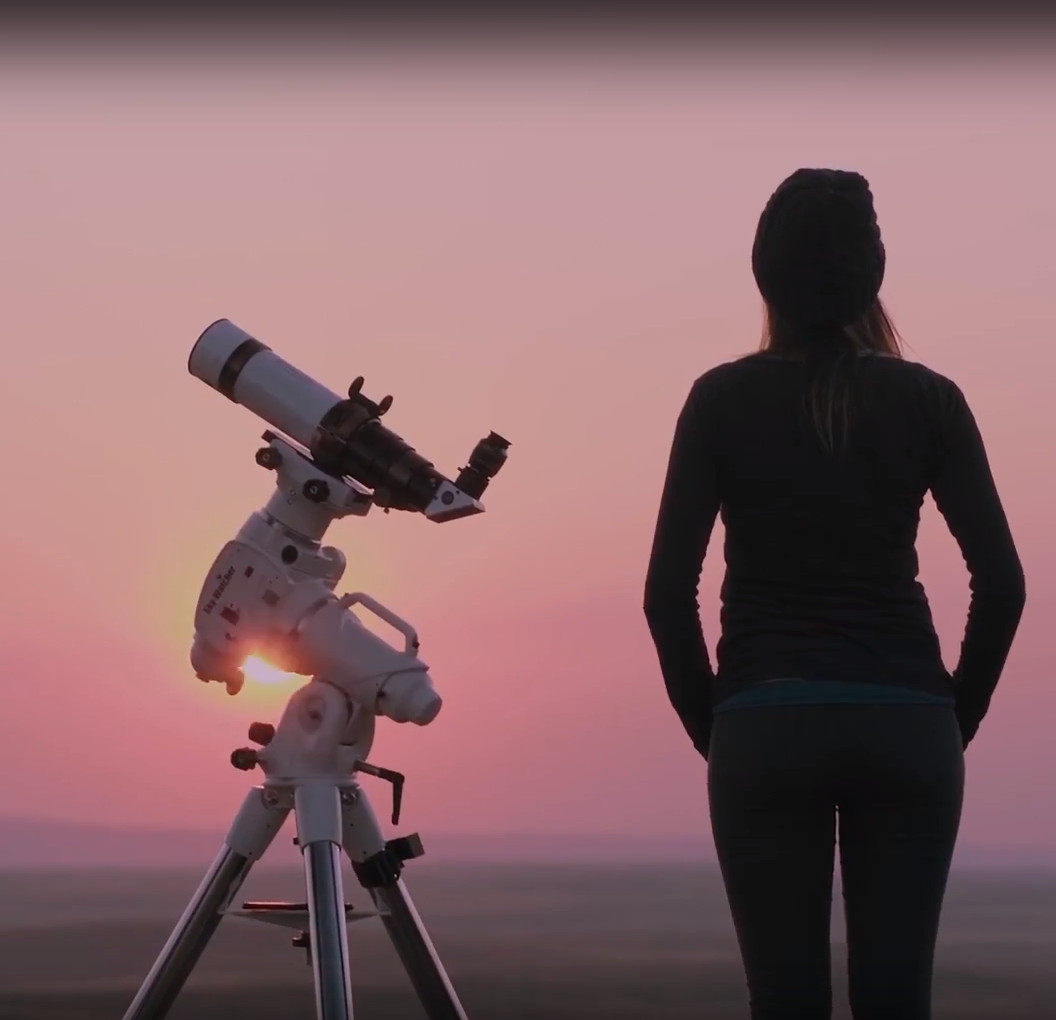


It depends on the telescope. Each telescope will give a different view, depending on their focal length and aperture. However, most telescopes, even many beginner telescopes, can see craters on the moon, Jupiter's four main moons, Saturn's rings, and possibly some brighter deep sky objects like the Pleiades Star Cluster.
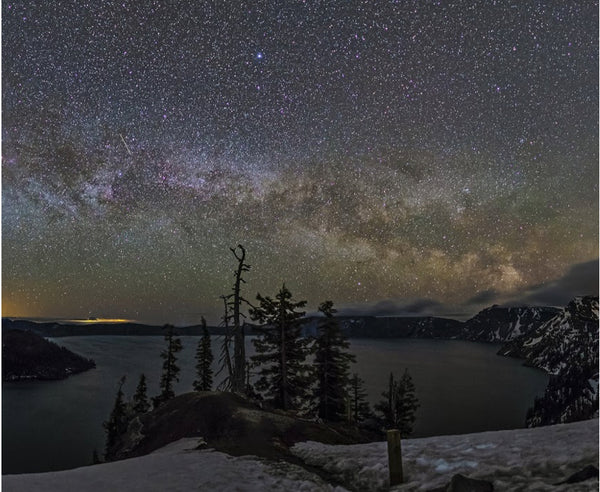
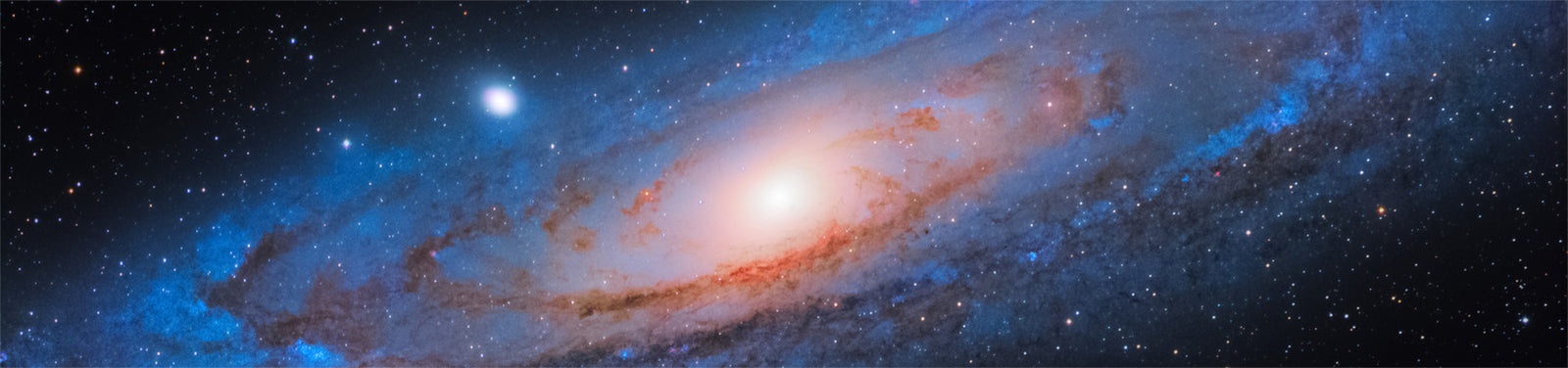
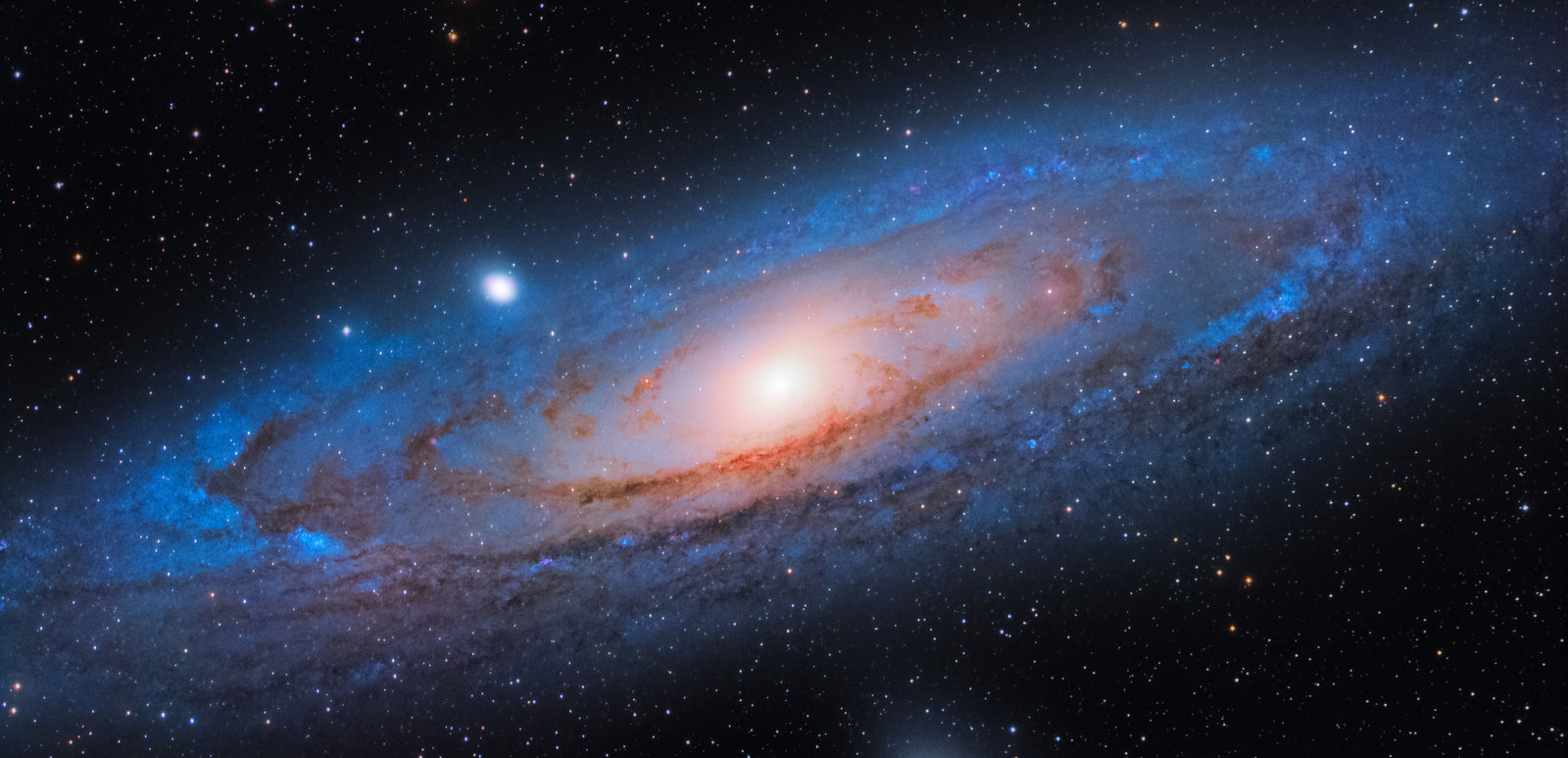
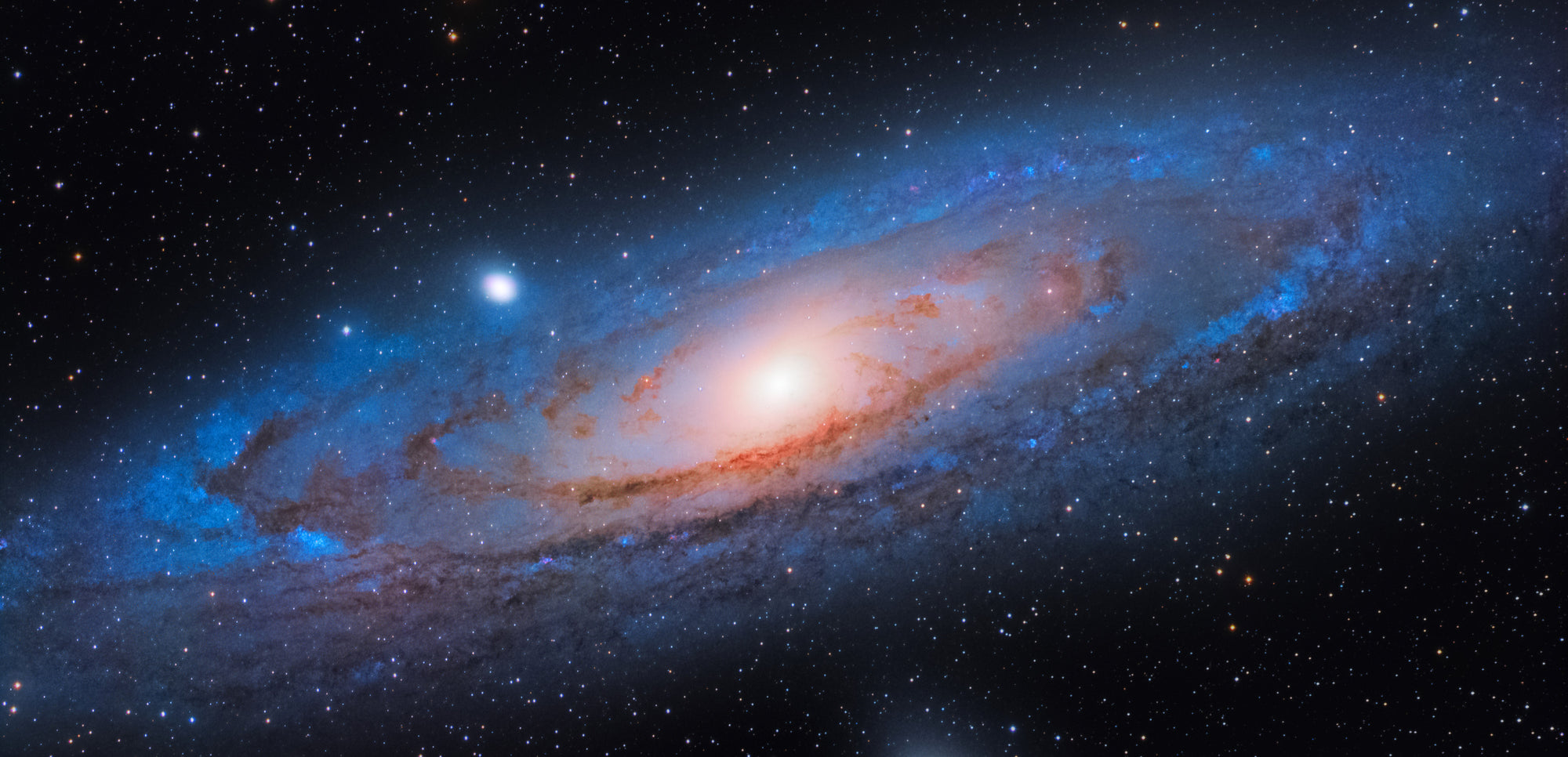
Away from city lights, more faint deep sky objects become visible. This includes the Andromeda Galaxy, the Orion Nebula, and many other objects. To find out what's in the sky tonight and the coming weeks, head to EarthSky.org for reference. Telescopes with larger apertures (front openings) will give better and more detailed views.
With larger aperture telescopes of around 8" (200mm) and up, even more details can be revealed. You can begin to see details like the Great Red Spot on Jupiter with the right eyepiece. With even larger telescopes, the sky is the limit — literally!
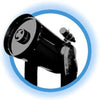
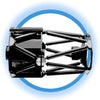
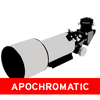
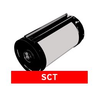
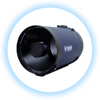
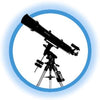
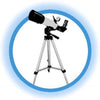
The three main types of telescopes for sale are:
- Refractors: use lenses to focus incoming light
- Reflectors: use mirrors to focus incoming light
-
Catadioptrics: use a combination of lenses and mirrors to focus light
All optical telescopes fall under one of these three categories, and each have their strengths and weaknesses. To learn about each type in more detail and understand the pros and cons of each, head to our blog post about The Basic Telescope Types.
A telescope gathers large amount of incoming light through an opening at the front called the aperture. It then uses lenses, mirrors, or both in combination to magnify and focus that light, which gets projected out of the telescope to an eyepiece or camera. You can read more (and watch a helpful video) on how a telescope works here.
Determining the telescope aperture size that works best for you will depend largely on what type of viewing experience you are hoping to achieve. A telescope's aperture is essentially its lens size, essentially how much light it can gather and magnify. Generally, telescope apertures range from 1.5 inches (3.8 cm) all the way up to 30 inches (75.6 cm). So, depending on your distance of observation and detail you are seeking, telescopes with larger apertures offer greater clarity, fidelity, and magnification power than smaller ones. Those wanting to observe astronomical events should consider investing in telescope with a large aperture as they provide better resolution and more details when compared to telescope models with smaller lenses.
A telescope can be a major investment, and its cost depends on the telescope’s type, size, brand, aperture, and additional features. A beginner telescope may range from $150 to $400; mid-level telescopes may cost anywhere between $400 and $1,000; and large telescope systems may cost up to several thousand dollars.
While it can be tempting to choose the telescope with the highest magnification, it’s important to remember that telescope magnification has its limits. Generally speaking, telescope magnifications of 10x or 15x are considered ideal for novice astronomers as they provide adequate resolution without excessive strain on the telescope’s mechanics or difficulty in using it. More experienced astronomers may opt for telescope magnifications up to 50x or even higher depending on their field of study and the view desired. As telescope magnification increases, so does the quality of the telescope’s optics and its price tag.
When it comes to good telescope focal lengths, there is no one-size-fits-all answer. Different types of observations and different levels of proficiency require different focal lengths. For basic astronomy, a good starting point for a beginner would be a telescope with a focal length somewhere in the range of 500 to 1000 millimeters. However, if you are looking for more difficult objects or scanning large deep sky objects, you might need to look into telescopes with even greater focal lengths. Ultimately, choosing the best telescope focal length depends on your own observational needs and preferences.
Generally speaking, the bigger telescope diameter means the telescope will collect more light. That leads to brighter and clearer images, which are especially useful when looking at faint and distant objects in the night sky. The most widely used telescope diameters range from as small as two inches to as big as fourteen inches. Telescopes with larger diameters provide deeper views of the night sky than smaller telescope diameters but may be harder for amateurs to use due to their larger size and bulkiness. Ultimately, the size of telescope you choose should depend on your budget, experience level, and what type of astronomy you plan on doing..
Celestron is a well-known brand, known for their versatile telescope designs with models ranging from telescope diameters of 60mm to 155mm. Meade Instruments is another manufacturer of both smaller telescope designs as well as larger telescope models with a telescope diameter range up to 406mm. Others that should be considered in terms of good telescope brands are Orion Telescopes & Binoculars, and Sky-Watcher USA. Ultimately, the telescope brand that's right for you depends on your individual viewing situation and budget, so consider all the available options before making your telescope purchase.
There are many telescopes for sale that are great for visual astronomy. If you're a beginner just starting out on a limited budget under $250, check out our bestselling visual telescopes. If you have a little more budget to spend between $250-$500, you can get a larger aperture telescope including some full-size Dobsonians. Above $500, you can choose from many telescopes with go-to capability, which automatically point to and track objects. For visual astronomy, we recommend buying the largest aperture telescope you can both carry and afford.
While many telescopes are great for visual astronomy, a much smaller percentage of telescopes are great for
deep sky astrophotography. Here are some general features to look for in telescopes for deep sky
astrophotography, regardless of telescope type:
- Fast focal ratio of around f/7 or lower (or attainable with a reducer)
- An image
circle large enough for your camera's sensor (or attainable with a reducer)
- The telescope weighs less than
half of your equatorial mount's payload capacity
- A quality equatorial mount is just as important as the telescope
for deep sky imaging.
While it's true you can take photos of the planets with just a smartphone, you can get even better results with
the right telescope and a planetary imaging camera. Here's what to look for in a telescope for planetary
imaging:
- Long focal length, ideally 2000mm or longer
- The largest aperture telescope you can afford, ideally 7" or larger
- Preferably a SCT
or Maksutov-Cassegrain optical design
Generally speaking, telescopes with larger apertures than others will have better resolution. This also depends on the optical design, but large aperture telescopes can resolve more detail than those with smaller apertures.
Never look at the sun without the proper filters, especially through a telescope! Since telescopes gather much more light than the human eye, looking at the sun without proper equipment can cause serious injury or even blindness. Before you even point your telescope at the sun, you need to attach a solar filter based on your telescope's size.
There are also dedicated solar telescopes that are designed to only observe the sun with h-alpha filters. These telescopes will provide even better views and images than a normal (white light) solar filter. Click here to shop dedicated solar telescopes.
We wish! Not even the Hubble Space Telescope can see the flags left on the moon. You can, however, locate the approximate location of the Apollo landing sites with most telescopes and a lunar map.