




|
|
SBIG Remote Guiding Head - Purchase Required
-
Save $100 on the Remote Guide Head when you buy any new SBIG ST- or STL CCD Camera!
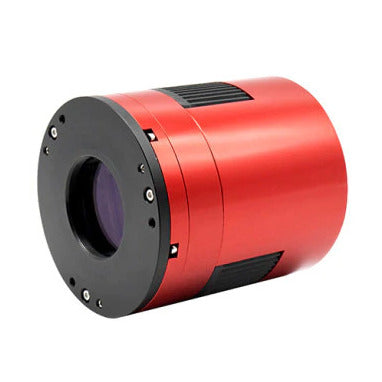
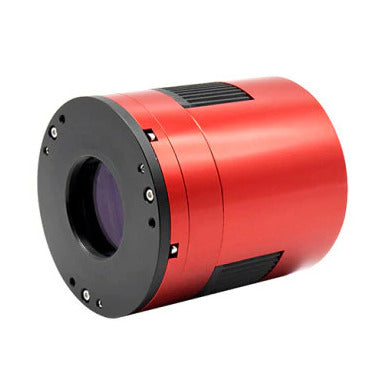
- The SBIG remote guiding head contains a cooled, 16 bit 657x495 TC-237H CCD indentical to internal self-guiding CCD in the STL camera body.
- The remote head is equipped with t-threads on the front cover and it will accept the SBIG eFinder assembly for guiding, a camera lens adapter, a T to C adapter, or the provided 1.25" nosepiece for use with an external guide scope.
- The external guider will also control the AO-L when used with an off-axis assembly or pellicle splitter.
- For STL-Series cameras and the new ST-Series cameras with the Remote Guide Head port.
|
SBIG has expanded the self-guiding capabilities in the new ST- and STL Research cameras by adding the option of a remote guiding head. With the remote guiding head attached, there are two, software selectable, TC-237 CCDs available for self-guiding under any conditions in addition to the main imaging CCD (except the "i", single sensor ST cameras, where the addition of the Guiding Head will result in one imaging sensor and one guiding sensor). One guiding CCD is located next to the imaging CCD in the STL's patented design, similar to the self-guiding arrangement in their ST dual-sensor line of cameras. The remote guiding CCD is in a small separate head that attaches to the main camera body by a short cable. There is no separate power supply or communication cable required. The remote head contains its own TE cooler and shutter. With the optional remote guiding head attached to a camera body with dual-sensors, self-guiding is accomplished by selecting either the internal TC-237 tracking CCD or the remote TC237 CCD using the camera control software.
The benefits of this flexibility are obvious. Internal guiding eliminates the need for a guide scope and separate autoguider. It also eliminates the problem of differential deflection of the guide scope or differential motion of the primary mirror relative to the guide scope. However, some users prefer to use an external guider when imaging through dark infrared band or narrow band filters, or for RGB color imaging in regions of the sky with sparse guide stars.
The remote guiding head may be used in an off-axis guiding accessory or attached to a separate guide scope. There is only one small cable between the remote head and the main camera body. The remote head can be left connected and the user may freely switch between the internal or the remote TC-237 for self-guiding. All the guiding functions are controlled by the same camera software that normally controls the internal guider.Specifications...- Dimensions:
2.75 x 2 x 2 inches (7 x 5 x 5 cm) excluding nosepiece and desiccant plug
- Weight: Approx. 0.5 lbs. (0.23kg)
- Computer Interface: USB 1.1 through main camera to computer. Proprietary protocol between remote head and camera body.
- Telescope Interface: T-thread or supplied 1.25" nosepiece, optional T-thread to C-mount and 35mm camera lens adapters
- Shutter: Internal Mechanical Shutter for dark frames plus electronic shutter for short exposures
- Power Requirements: None (Remote head receives power through the head cable from the main camera).
- Mounting connections: 1/4-20 threaded hole on side of camera housing.
Please note that only newer ST-series cameras with a Remote Guide Head port are ready to accept the Remote Guide Head. All STL cameras are Remote Guide Head ready. Save $100 on the Remote Guide Head when you buy any new SBIG ST- or STL CCD Camera! In order to take advantage of this offer, all you have to do is click the "Accessories" tab to your left, find the specially-priced Remote Guide Head, and add it to your shopping cart along with a ST or STL CCD camera.
|
|
|
|